
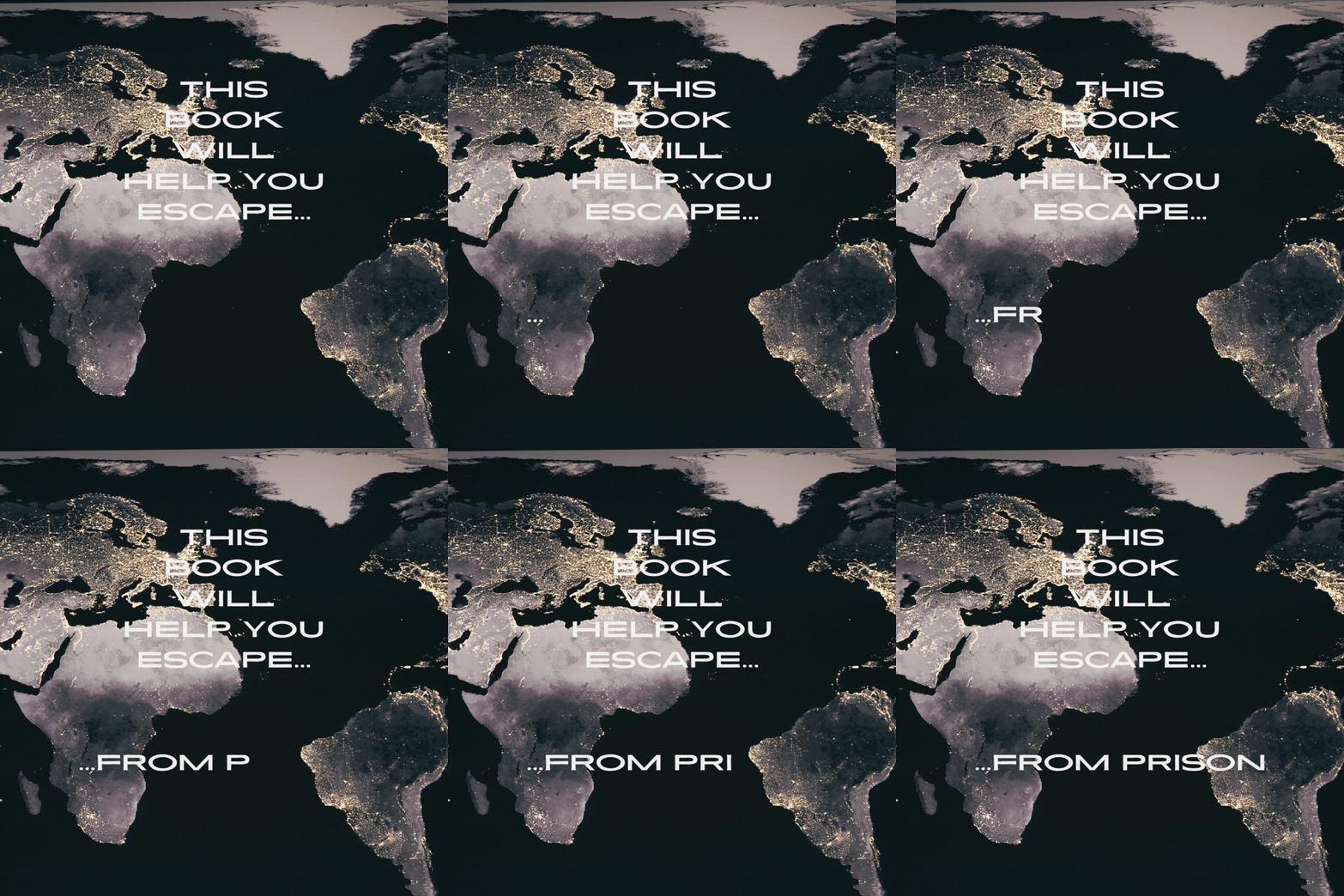
It’s strange. As someone who has always been a history buff, I always find myself stuck between being positive about the future and being worried that we are in a perpetual cycle, repeating mistakes from the past.
The second thought seemed to be prevalent as I read the book Prisoners of Geography by Tim Marshall. I had moments where I had to take a breath and close the book.
Ticking Time Bomb
My most striking takeaway from the book is the thought that everyone, regardless of where they live, is living on a ticking time bomb.
I guess I better explain myself.
In the book, Tim Marshall shares information about treaties around the world, the vast amount of enemies many countries have, and how many countries help each other just because they have a common enemy.
It made it clear to me that so many countries have got a list of reasons to go to war. The sobering thought is just like in the 1960s, the very probable devastation is a reason why many put their foot on the brakes.
The Diversity in the Book
The book is divided into ten chapters, each chapter focusing on different parts of the world. There’s a chapter on India and Pakistan, a chapter on Russia and the Ukraine, and a chapter on the African continent.
I don’t want to spoil the book for anyone who is brave enough to read it but just a heads-up, there’s a certain ‘superpower’ that seems to be woven into all of the chapters. You can probably predict who that might be.
If we’ve learned anything from WWII, it’s that wars don’t begin the day war has been declared, or even when a country has been invaded. There’s always a backstory, one in which many characters are involved.
The author shares the backstory of many current wars, political clashes, and undercurrents that we the general public only get a taste of.
It’s very clear that at times, the author shares his opinion instead of just sharing geopolitical events. Despite that, the richness of information Tim Marshall shares with the reader cannot be denied.
Lessons From Prisoners of Geography
When studying the Cold War, we, the students, are led to believe that both superpowers were fighting proxy wars, but that was just practice during that era. The book sheds light on the fact that this practice has continued in so many ways.
A huge amount of countries have got their hands in so many pies, and this is often what worsens political situations.
Some of this is a reflection of how the world changed during and after the Cold War and some of this is the calamitous effects of colonialism that are still evident.
Escaping From Prison
Although reading the book gave me a feeling of helplessness, it also made me feel empowered at times. I’ve worked on various historical projects, but they’ve been limited to events that have affected Europe, West Africa, and North America.
This book has widened my worldview and helped me understand events that I’ve been curious about for a while and it’s also confirmed a few things. (Wars these days can no longer be simplified to two sides warring against each other.)
Although Prisoners of Geography can’t help us physically escape from the literal geographical position we find ourselves in, it can indeed help us to flee the geographic boundaries we have in our minds (due to the biased accounts we have read that don’t fully show political events in their entirety).
I could write an essay based on the knowledge I’ve acquired from this book. Seriously. This book is more than recommended by me. It’s a must-read.
Title: This Book Will Help You Escape from Prison
Author: Leonie Thomas
Date Published: 31.5.2024
 Leonie Thomas